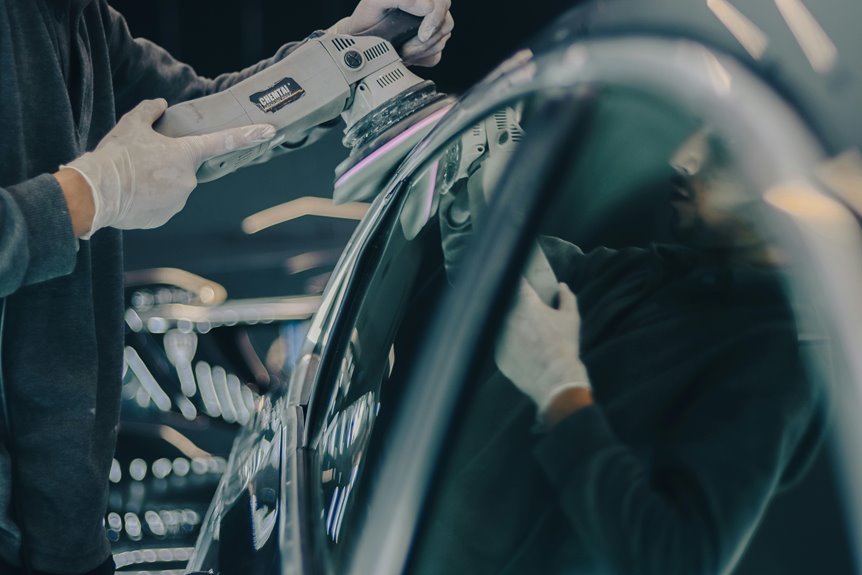

While you use a car polishing machine, you’re not just chasing shine, you’re changing how the paint looks and feels at a close level. As the pad levels tiny highs and soft defects, it can fade swirls, reduce scratches, lift oxidation, and clear haze, all while making the surface smoother. Then the light starts to roll across the paint in a cleaner sheet, which brings out more gloss, depth, and color. And that’s where the finish gets really interesting.
What Car Polishing Machines Change on Paint
A car polishing machine touching paint doesn’t just add shine, it actually changes the surface itself. You get surface texture changes as tiny peaks level out and rough spots become flatter. That matters because light can then travel across the panel in a cleaner line, and your paint starts to look deeper and more even.
The gloss improvement mechanisms work by gently refining the clear coat, so dull patches lose their grip on the eye. Instead of seeing scattered reflection, you see a smoother, richer finish that feels cared for.
If your car has swirls, haze, or faded areas, the machine helps turn that tired look into something you can feel proud of. It’s a quiet upgrade, but it changes how your whole ride belongs on the road.
Paint Correction Basics
You’ll initially learn how to spot the main paint defects, like swirls, scratches, oxidation, and haze, because each one changes how the light hits your paint. Then you’ll see how correction compounding starts the real fix by cutting away damaged clear coat in controlled steps.
After that, you can match the pad, polish, and machine to the defect so you get better results without chasing your tail.
Paint Defect Types
Paint defects can look small at initially, but they often change the way a car’s finish reflects light and holds depth. You’re not alone whenever you spot swirls, scratches, oxidation, water spots, or holograms and feel unsure. Use defect identification methods with a bright lamp, and sort surface contamination types before you polish.
| Defect | What you notice |
|---|---|
| Swirls | Spiderweb lines |
| Scratches | Clear, sharp marks |
| Oxidation | Dull, chalky color |
| Water spots | Rings or crust |
| Holograms | Blurry buff trails |
When you know the type, you can choose the right path and keep your paint looking like it belongs in the spotlight. That clarity helps you work with confidence, not guesswork, and your finish starts to feel cared for.
Correction Compounding Steps
Because the damage sits in layers, correction compounding starts with a careful initial cut that levels the worst defects without hurting the paint. You begin with defect mapping, so you know where swirls, haze, and deeper marks hide. Then you choose pad selection based on paint hardness and damage depth, since the wrong pad can leave you chasing the same marks twice.
Work a small section at a time, keep the machine moving, and use light to moderate pressure. Check your results often, because you want removal, not drama. When the initial pass still shows trails, step down to a finer pad and polish. That gradual process builds trust in your work and helps your finish look clean, smooth, and ready for the next stage.
Removing Oxidation
A faded, chalky finish can make even a well-kept car look tired, but removing oxidation brings that color back to life. When you use a car polishing machine, you help strip away the dull outer layer so the shine underneath can show.
That oxidation removal step supports paint restoration by making the surface look richer and more even. You’ll notice the color start to pop again, especially on sun-beaten panels that have lost their glow.
As you work, keep the pad moving and let the machine do the heavy lifting. This keeps the finish smooth and helps you feel like you’re part of a crew that knows how to care for a car with pride.
After that, the paint looks ready for protection.
Fading Scratches and Swirl Marks
Swirl marks and light scratches can make your paint look tired, but you can usually soften them with the right polishing machine.
You’ll get the best results when you match the pad, polish, and machine speed to the defect you’re fixing.
With steady passes and a careful finish, you can bring back a smoother, brighter surface without making things worse.
Swirl Mark Removal
Whenever you notice faint swirl marks or shallow scratches on your car, a polishing machine can help fade them by leveling the damaged top layer of clear coat. You join a careful process that brings back gloss without making your paint feel overworked. Start with a soft pad and a fine polish, then let the machine glide in even passes.
Light pressure helps you avoid paint burn through, and slower finishing work supports hologram reduction for a cleaner look. As the surface smooths, light stops breaking apart and your color looks deeper and warmer. You’ll see the difference most on dark paint, where tiny marks love to hide.
With patience, you can give your car a finish that feels proud, polished, and ready to shine.
Scratch Fading Techniques
Even stubborn scratches can fade a lot more than you might expect, as long as you use the right machine, pad, and polish together. You’ll want to start with a clean panel, then choose a mild cutting pad so you don’t rush into paint film thinning. Move the machine slowly, overlap each pass, and let the polish do the work.
That steady approach helps soften swirl marks and turns sharp edges into faint lines. Next, refine with a softer pad to restore clarity and keep the finish even. For tight spots, lower speed and lighter pressure support edge burn prevention.
Should you stay patient, you’ll see the scratch blend in, and your paint can look calmer, brighter, and more like the rest of the crew’s cars.
Creating a High-Gloss Finish
A high-gloss finish starts with more than just shine, because the machine has to level the paint surface so light can bounce back cleanly. You can consider machine gloss science as the art of guiding that reflection, not forcing it. Whenever you polish with steady passes, you join a crowd that values depth, clarity, and dignity in every panel.
- Start with a matching pad and polish.
- Keep the machine moving at a calm pace.
- Use light pressure so the finish can refine.
- Wipe and inspect under bright light.
After that, high shine maintenance becomes easier, because the clearer surface resists dulling and keeps that rich, glassy look longer. With patience, you’ll see your paint turn from tired to bold, and that feels pretty great.
Improving Paint Smoothness
Better gloss often starts with smoother paint, because shine only looks deep while the surface feels flat under the pad. You help that happen once the machine levels swirls, light haze, and tiny bumps that break reflection.
With steady passes, you guide surface texture refinement, and the paint begins to feel cleaner and more even. Then the panel reflects light in one calm sheet, which brings gloss uniformity betterment across the whole finish.
Once you’ve ever felt your car looked a little “busy” in bright sun, this step quiets that look fast. Use firm control, matched pads, and careful pressure so you don’t chase rough spots around. Instead, you build a smoother base that makes your paint look cared for and part of the club.
Clear Coat Clarity
When you polish clear coat the right way, you do more than make the paint shine, because you also help the finish look clean, deep, and free of distractions. You’ll notice stronger clear coat transparency, and that means your eye sees less haze and more crisp reflection. That’s the payoff your car community loves.
- You reduce swirls that break up light.
- You smooth micro-marring that clouds the surface.
- You clear away oxidation that can make panels look tired.
- You refine the coat so finish clarity feels sharp and even.
As you work, each pass helps the surface reflect light in a steadier way. So your paint doesn’t just look better, it feels cared for. And that sense of pride? It’s hard to beat.
Adding Color Depth and Richness
Because the surface is now cleaner and more even, the color can finally show its true depth, and that’s where polishing starts to feel almost magical. You see richer reds, deeper blues, and darker blacks because the machine flattens tiny flaws that once broke up the light.
As you move across the panel, the paint warmth comes forward, so the finish feels alive instead of flat. That change also builds finish richness, which gives your car a fuller, more cared-for look. With each pass, you help the clear coat reflect light more smoothly, and the color stops hiding behind haze.
In the end, your paint looks more connected, more lively, and much more welcoming, like it belongs in the spotlight with you.
Getting a Show-Car Finish
To get a true show-car finish, you have to move past simple shine and start chasing perfection in the surface itself. You build that look with a detail improvement workflow that removes swirls, haze, and tiny holograms before they ever catch the eye. Under strong paint inspection lighting, you can spot what casual cleaning hides.
- Start with a clean, dry panel.
- Cut defects with the right pad and polish.
- Refine the finish with lighter passes.
- Check every section in angled light.
When you work this way, you don’t just brighten the paint. You make it flatter, deeper, and more even, so the car feels like it belongs on the show field. That’s the difference between nice and unforgettable, and you’ll see it every time the light moves.
Frequently Asked Questions
How Do I Choose Between Rotary and Random Orbital Polishers?
For quick paint correction, a rotary polisher removes defects faster. For gentler action and easier handling, a random orbital is the better choice. Select the one that fits your experience and the finish you want to protect.
Can Polishing Remove Water Spots and Industrial Fallout?
Yes, polishing can help remove water spots and clear away industrial fallout. Use the proper abrasive and method, and keep in mind that deep etching may require stronger paint correction or a dedicated decontamination step before finishing.
What Surface Roughness Can Machine Polishing Achieve?
You can achieve a mirrorlike finish, often around Ra 0.2 μm or lower, and in some cases close to 0.05 μm. This level of polishing improves surface smoothness and gloss.
Will Polishing Leave Holograms on My Paint?
Yes, polishing can leave holograms if you use a rotary, apply too much pressure, or choose the wrong pad, but you can cut the risk with careful technique and a proper finishing step, which helps keep the paint clear and the surface smooth.
Does Polishing Add Protection Before Waxing or Sealing?
Yes, polishing can add a little protection, especially with all in one products, but its main job is to prepare the surface before waxing or sealing. Protection increases when you add wax or sealant afterward, which gives you a longer lasting finish and better durability.