
Whenever you rely on an office printer, you need more than a box that spits out pages. You need a machine that turns files into clean, ordered prints without slowing your team down. Print speed, quality, and cost all matter, but so do duplex options, energy use, and easy fixes whenever things jam. Should you choose well, you can cut waste, keep work moving, and avoid those all-too-familiar “why is it blinking again?” moments.
What Is an Office Printer’s Print Function
At its core, an office printer’s print function takes digital files and turns them into paper copies you can use right away. Once you learn the print function basics, you get a clear document output overview that helps you feel in control, not lost in office noise.
You send a file from your computer or phone, choose settings, and let the printer handle the rest. That simple path lets you share reports, forms, and handouts with confidence. If you work with a team, this function helps everyone stay on the same page, literally and socially. It also supports quick changes, so you can print what you need without fuss.
After you understand this core step, using an office printer feels a lot less like guesswork and more like teamwork.
How a Printer Turns Files Into Pages
When you send a file to an office printer, it doesn’t just “make copies” and hope for the best. Initially, your computer starts the file conversion steps, changing your document into a language the printer can read.
Then the printer uses its page rendering process to map words, images, and margins onto each sheet. You can imagine it like a shared team plan: every page gets placed in the right spot before anything moves.
After that, the printer breaks the job into tiny data pieces, sends them to the right hardware parts, and lines up each page order. Because of this, your file becomes clean, readable pages instead of a messy jumble.
As soon as everything works together, you feel less stress and more confidence at the printer.
Which Print Features Matter Most at Work?
Once your file turns into clean pages, the next question is simple: what printer features actually make work easier? You’ll want a printer that fits your team’s daily rhythm and helps everyone feel supported.
Automatic duplex printing cuts paper use, while wireless and cloud options let you print from shared folders without fuss.
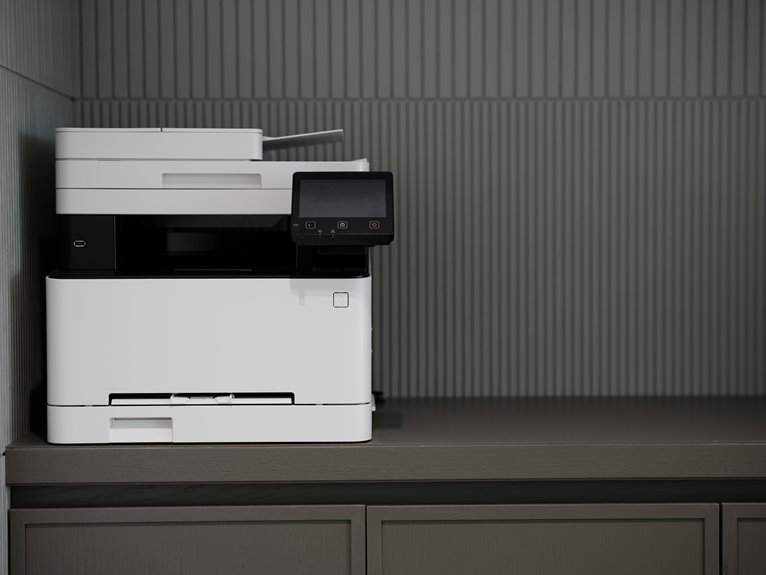
When your office handles mixed tasks, a multifunction model keeps printing, scanning, and copying in one place, so your desk feels less crowded.
Strong print management helps you track use, control costs, and keep jobs organized. Just as vital, device security protects private files with user login and secure release. Together, these features help your group work smoothly, share resources, and trust the system.
Why Print Speed Affects Office Output
Because office work often moves fast, print speed can make the difference between a calm day and a messy backup. Whenever your printer keeps up, your team stays in sync and no one waits around with a stack of jobs. That output speed impact shows up most whenever several people print at once. A quick machine cuts line time and keeps handoffs moving.
Even better, a short initial page delay helps you start fast, so you’re not stuck staring at blinking lights. In shared spaces, that steady pace builds trust because everyone knows the device can handle the rush. You get less frustration, smoother shifts, and a workspace that feels ready to help, not hold you back.
How Print Quality Shapes Daily Work
When you print reports, sharp text helps you read details fast and keeps your work looking polished.
When colors stay accurate, you can trust charts, photos, and branded materials to match what you meant to show.
That mix of crisp text and true color makes your daily printing feel smoother and a lot less frustrating.
Sharp Text Output
| Check | Result |
|---|---|
| Headings | Clear |
| Body text | Easy to read |
| Small print | Distinct |
| Forms | Accurate |
| Notes | Legible |
You and your group stay in sync whenever pages look consistent from the initial sheet to the last. That steady look supports smoother handoffs and fewer reprints, so nobody feels left behind via sloppy output. Even a simple memo can feel polished whenever every letter lands cleanly.
Color Accuracy Matters
With color calibration, you keep blues, reds, and skin tones steady across jobs, so your work looks polished every time. And with color consistency, you don’t have to guess whether today’s handout will match yesterday’s version. You save time, reduce waste, and keep your group moving together.
Even simple office pages feel more professional when the colors stay true, and that can make daily work feel easier for everyone.
Why Duplex Printing Saves Paper
Because every sheet counts in a busy office, duplex printing helps you cut paper use without slowing work down. Whenever you choose paper conservation, you make each print job go farther and keep your team’s stack of supplies from shrinking too fast.
With double sided defaults turned on, your printer uses both sides of the page automatically, so you don’t have to rethink every document. That small change adds up fast, especially whenever reports, drafts, and handouts move through the office every day.
You also send less paper to the trash, which feels good for your group and for the budget. So, whenever you print with duplex settings, you’re not just saving sheets. You’re supporting a smarter, calmer workspace that everyone can feel proud of.
How Network Printing Improves Access
Network printing lets you share one printer across your team, so you don’t have to crowd around a single desk or wait your turn for long.
It also makes remote printing easier, which means you can send a file from another room, another floor, or even home whenever work gets busy.
That kind of access helps you stay flexible and keeps your day moving without extra hassle.
Shared Printer Access
A shared printer can make your office feel much more open and less cramped, especially whenever several people need the same machine every day. With shared access, you and your team can print from one device instead of crowding around separate units. That setup helps everyone feel included, because the printer becomes a common tool, not a guarded spot.
Clear printer permissions keep things fair and simple, so each person knows whenever they can print and who can manage settings. As a result, you waste less time asking around or waiting for a free machine. You also build smoother routines, since the whole group can rely on the same system. In a busy workspace, that small shift can make daily printing feel calmer and more connected.
Remote Print Convenience
Whenever you can send a file to the printer from another room, or even from home, work starts to feel a lot easier. You stay connected to the team without rushing back to your desk. With mobile access, you can print from a phone, tablet, or laptop whenever plans change fast.
Cloud printing makes that even smoother because your files follow you across devices and locations. So you don’t feel stuck or left behind whenever the office gets busy. Instead, you can keep your place in the workflow and help your group move together.
Network printing also cuts small delays, which means fewer awkward waits at the machine and more time for the work that matters. That kind of convenience makes your day feel calmer, and your office feels more connected.
What Print Volume and Duty Cycle Mean
Because printers can look similar on the outside, it’s easy to confuse how much work they can handle with how much you actually plan to send through them. Print volume tells you your usual monthly page limits, while duty cycle and peak workload ratings show the toughest load a printer can survive without wearing out too fast. You’re not alone when those numbers seem fuzzy at the outset. Consider this:
| Term | What it means | Why you care |
|---|---|---|
| Print volume | Pages you print each month | Matches everyday use |
| Duty cycle | Max pages a device can handle | Protects the machine |
| Peak rating | Short bursts of heavy use | Helps during busy days |
| Limit | Monthly page limits | Prevents overload |
| Rating | Peak workload ratings | Guides safe use |
When you compare both, you can choose a printer that fits your team nicely.
Match Printer Types to Office Tasks
Now that you know how print volume and duty cycle shape what a machine can handle, you can match printer types to the jobs your office actually does each day. Good printer type selection helps you feel confident, because the right tool fits the work and the team.
- Laser printers suit fast text-heavy jobs and busy desks.
- MFPs fit teams that print, scan, copy, and fax together.
- Compact desktop printers work well for light, personal use.
With task based device matching, you avoid crowding one device with every request. Instead, you place each printer where it helps most, and your crew moves smoothly through the day. That shared rhythm builds trust, cuts frustration, and keeps everyone on the same page, even as deadlines start acting dramatic.
How Ink and Toner Costs Add Up
You may suppose ink and toner are small costs, but they can stack up fast whenever your office prints every day.
Ink cartridges usually cost more per page, while toner can last longer, so the real price depends on how much you print.
Whenever you compare cartridge price with page yield, you can spot the option that keeps your budget steadier.
Ink Cartridge Expenses
Sticker shock often starts with the cartridges, and that’s where printer costs can quietly pile up. You feel it most once cartridge replacement lands sooner than you hoped, and the price tag stings a little. Still, you’re not stuck.
- Check refill options before you buy a new pack.
- Compare store prices and office supply deals.
- Keep an eye on how often your team prints.
Once you plan ahead, you protect your budget and your peace of mind. You also help everyone in the office feel like they’re in this together, not scrambling for a last-minute fix. Small choices can soften the hit, and that makes daily printing less frustrating.
Over time, smarter ink spending keeps your workspace calm, steady, and ready for real work.
Toner Yield Comparison
As you compare toner yield, the real question isn’t just the price on the box, but how many pages that cartridge can actually produce.
You want value that fits your team, not a surprise refill every week.
Check yield ratings, because they show the expected page count under normal use.
Then compare cartridge lifespan, since a longer-lasting toner can lower your cost per page and keep your office moving smoothly.
If you print drafts, reports, and handouts, those small savings add up fast.
Also, keep in mind that heavy graphics can shorten output, so the same cartridge may last less time than you expect.
As you choose wisely, you spend less, refill less, and stay in step with coworkers who need reliable printing every day.
Which Energy-Saving Features Reduce Waste
Energy-saving features can cut waste in a big way, and they do it without making your workday harder. As you choose a printer with smart power controls, you help your team save energy and feel good about the tools around you.
- Sleep mode lowers power use when the printer sits idle, so you’re not wasting electricity between jobs.
- Quick warm up gets the device ready fast after sleep mode, so you wait less and keep work moving.
- ENERGY STAR certification often means the printer uses less power all day, which trims costs and supports a greener office.
These features work best together. You get less energy waste, smoother use, and a setup that fits a team that cares about doing things well.
Common Print Problems That Slow Teams Down
Even a printer with smart energy features can still slow your team down whenever it keeps tripping over everyday problems. You feel it fast if paper jam delays stop a rush job and everyone waits beside the tray. Then spooler queue issues stack files behind one stuck page, and the whole line backs up.
You might also notice faded text, empty toner warnings, or a tray that won’t pull paper cleanly. These snags don’t just waste minutes; they break your team’s rhythm and make simple tasks feel tense. So, if your printer acts up, clear the jam, restart the queue, and check the paper path together. That shared fix keeps work moving and helps everyone feel back on track.
How to Choose an Efficient Office Printer
Choosing an efficient office printer starts with your team’s real workload, because the right machine should keep up without making everyone wait. You’ll fit in better once the printer matches your office workflow and feels easy for everyone to use.
- Check speed initially. Aim for 30 to 40 pages per minute, or more in the event that your team prints a lot.
- Look for multifunction tools. A printer that scans, copies, and faxes can save space and lower print maintenance.
- Pick smart features. Duplex printing, wireless sharing, and cloud access help your group work together from anywhere.
Then compare energy use, security, and service support. An ENERGY STAR model can cut power costs, while secure print release protects private files. Once you choose well, the whole team feels less stuck and more connected.
Frequently Asked Questions
Which Printer Certifications Indicate Lower Energy Use?
Energy Star and Blue Angel certifications indicate lower energy use. They show that a printer meets efficiency standards and uses less power during operation.
How Do MFPS Reduce Office Equipment Maintenance?
You cut maintenance by replacing several machines with one MFP, which means fewer parts to service and fewer repair visits. Your team only learns one device, making support simpler and keeping daily work on track.
What Security Features Protect Confidential Print Jobs?
Confidential print jobs are protected by secure release printing and encrypted print queues, which keep documents from printing until the right user is present. User authentication and encrypted hard drives add another layer of control, ensuring sensitive files stay accessible only to authorized staff.
Can Cloud Printing Track Departmental Printing Costs?
Yes, cloud printing can track departmental printing costs through cost allocation and print quota reports. It shows which department prints what, lets you set limits, and helps keep teams accountable.
How Does First-Page-Out Time Affect Busy Offices?
It reduces time spent waiting for the first sheet, so printing does not back up at the device. Documents start moving sooner, output finishes faster, and staff can keep pace during heavy office workloads.