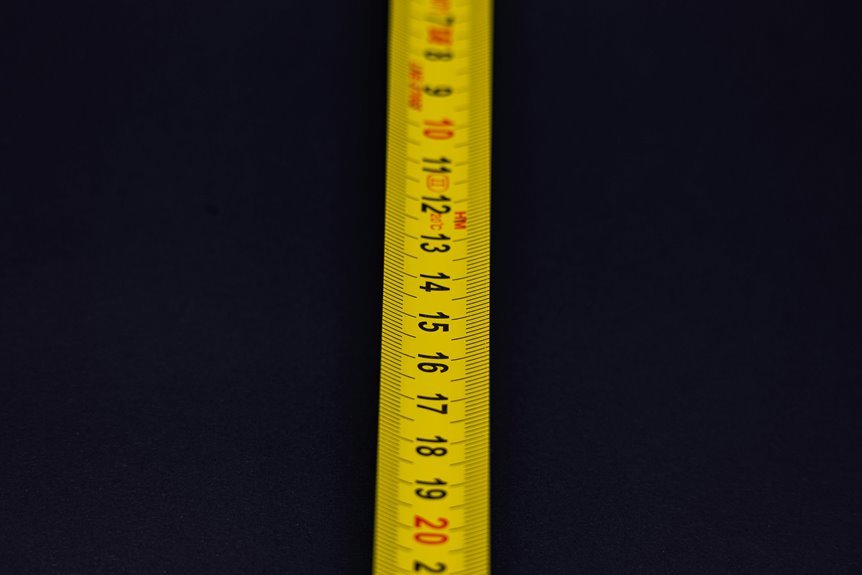

When you rely on a measuring tape, small details can change the result more than you might expect. You need to look at the blade, the hook, the markings, and even the room around you, because each one can nudge the measurement off target. Once you know which factors matter most, you can spot the weak points fast and trust your numbers more. That starts with the tape itself, and the first detail may surprise you.
The Main Factors That Affect Tape Accuracy
Whenever you want a tape measure to give you a true reading, a few small details matter a lot more than most people expect. You need to start with the tape’s accuracy classes, because Class I, II, and III set different error limits. Then you should check calibration standards, since certified tapes and proper certificates tell you the scale has been verified.
A clear hook also matters, because it helps the tape zero correctly whenever you pull it tight. Next, look at the markings; thin, distinct lines are easier to read and help you avoid small mistakes. Finally, choose a tape made from durable material, because wear, bending, and fading can quietly ruin trust in your measurements. Whenever all these parts work together, you get readings that feel solid and dependable.
Blade Width and Measurement Precision
Blade width might seem like a small detail, but it can change how steady and readable your measurements feel in your hand. When you pick a wider blade, you usually get a flatter face that resists twisting, so the numbers stay easier to read. A narrower blade can feel lighter and fit tight spaces, but it may flex more if you lean on it.
That’s where blade rigidity matters, because a stiffer blade helps you trust the line you’re following. Also, the blade profile shapes how the tape sits against the surface and how smoothly it springs back. So, if you want a tape that feels calm, clear, and easy to use, choose the width that matches your task and makes you feel at home.
How Tape Length Affects Accuracy
As your tape gets longer, small stretch can add up and make each reading a little less exact.
You’ll notice that a long tape can also drift more at the far end, so the risk of error grows with distance.
That’s why you should trust a tape’s rated reach and use it within the length where it still stays accurate.
Tape Stretch Impact
As a tape gets longer, small stretch can turn into a bigger measuring mistake, so it helps to know what’s going on before you trust the number on the blade. You’re not imagining it: every pull changes tape elasticity a little, and weak stretch resistance lets the blade creep. That’s why a snug tape gives you a better read than one hanging loose.
- Keep the tape firm, not strained.
- Choose a blade with strong stretch resistance.
- Recheck long pulls after you measure.
When you work with others, this matters even more, because a shared method keeps everyone on the same page. If you want cleaner results, let the tape settle, then read the mark with care. A steady hand and a steady tape make a solid pair.
Long-Length Error Risk
As the tape gets longer, small errors can grow fast, and that’s where you can get tripped up unless you’re not careful. When you measure across a wide span, tiny gaps, bent sections, or loose alignment can stack into a bigger miss. That’s long span tolerance drift in action, and it can make a good reading look off.
You’ll also notice cumulative segment error if you measure in steps, because each added section can nudge the total. So, you want to keep the tape straight, steady, and fully supported by your team. Read each mark with care, and trust the same starting point every time.
With longer tapes, your best move is simple: stay consistent, and let the whole crew measure cleanly together.
Accurate Reach Limits
You can hold a tape measure in your hands all day, but its reach still has limits that affect how true your reading stays. Whenever you stretch it near its reach limit, the blade can sag, twist, or pull off line, and that adds error.
In your working range, the tape stays steadier, so you get cleaner numbers and less second guessing.
- Keep the blade taut so it reads true.
- Use shorter spans whenever you need finer accuracy.
- Trust certified tapes for longer jobs.
If you’re measuring across a room, break the task into smaller parts.
That way, you stay with the tool’s strength, and the result feels more reliable, like you and the tape are on the same team.
Why Hook Design Matters
A tape measure can be spot-on, but provided the hook is wrong, the reading can still fool you. You need a hook that grips cleanly, so your hook grip accuracy stays steady at the edge. As the metal tip moves just enough for true zero engagement, you can measure inside and outside spans without second-guessing yourself.
That small shift matters because it keeps your start point honest. You’ll also feel the difference as you pull the blade taut and the hook settles with confidence. Then your numbers line up, and you can work with the team feeling sure of the result.
A loose hook, though, can wobble, slip, and add tiny errors that snowball fast, especially whenever you’re trying to fit pieces neatly together.
Blade Material and Marking Quality
Now that the hook is doing its job, the blade has to keep that promise through staying straight, strong, and easy to read. You need a tape that feels solid in your hand and stays clear as you glance at it on a busy job.
Steel or fiberglass can both help with blade durability, so the tape keeps its shape and resists wear. Clear marking contrast matters just as much, because thin lines and bold numbers let you read fast without second guessing.
- Strong coatings help protect the marks from rubbing off.
- Steel blades stay rigid and steady.
- Fiberglass blades resist bending in tight spaces.
As the blade stays reliable, you join a crowd of users who trust every measurement and move with confidence, not guesswork.
How Tension Changes Your Reading
Though the tape sags or pulls too hard, the reading can shift fast, and that tiny change can throw off your whole job. You want steady hands and steady tension, because the tape measures best whenever it stays straight and calm. Spring tension helps keep the blade firm, while pull force can stretch the line just enough to blur the mark.
Curvature, Sag, and Surface Effects
Even whenever you hold the tape with steady hands, the surface under it can still change the reading in sneaky ways. When the blade bows, you measure a curve, not a straight line, so the number looks a little too long. Soft ground lets the tape sink, while rough concrete adds surface friction that can tug at the edge. You’ll get better trust in the result when you keep strong support contact along the full span.
- Lay the tape flat and let it rest.
- Keep each end aligned before you read.
- Watch for dips, bumps, and side pull.
That small check helps you feel like you belong among careful measurers. Your tape works best when every point shares the load, because even a tiny sag can whisper the wrong answer.
Temperature and Humidity Effects on Tape
Heat and moisture can quietly change a tape’s length, so you need to treat your tape like a tool that notices the weather. While you work in hot sun, the metal can expand a little, and temperature effects might make long runs read slightly off.
In damp spaces, humidity effects can add more trouble by softening coatings, encouraging rust, or making the tape feel less steady. You can protect your work through storing the tape dry, letting it rest before use, and keeping it away from direct heat or soaked surfaces.
If you measure outdoors, check the tape after big weather shifts. Small habits like these help you stay in the same careful crew, where your measurements feel dependable and your projects fit together better.
How to Read a Measuring Tape Accurately
A measuring tape looks simple, but reading it well takes a little care, and that care pays off fast. You can join the crowd that measures with confidence once you start at the zero reference point and keep the tape flat.
- Read the longest lines first, then move to shorter ones.
- Use fractional mark identification for half, quarter, and eighth inches.
- In metric units, count each small line after the centimeter mark.
Next, keep your eye straight over the mark so you don’t guess from an angle. If the hook feels odd, bear in mind it shifts a little for true zero, so that tiny motion helps your reading.
With practice, you’ll spot numbers and marks quickly, and the tape will feel less like a puzzle and more like a tool you trust.
How to Maintain Measuring Tape Accuracy
Because a tape measure can drift out of true over time, you need to handle it with care if you want accurate results.
Keep the blade clean, dry, and fully retracted after each use so grit and rust don’t creep in. Good tape storage matters, because a bent case or kinked blade can throw off the hook and the markings.
Before any job, do quick calibration checks by comparing the tape with a trusted ruler or known standard. Pull the tape taut, but don’t yank it. That small habit helps protect the hook and keeps the zero point honest.
Also, avoid heat, moisture, and drops, since they can weaken the blade. With a little routine care, you stay in the accurate crew.
Frequently Asked Questions
Which Tape Accuracy Class Is Best for Surveying Work?
Choose Class I for surveying work because it offers the tightest accuracy and matches survey grade tape standards, so your measurements stay precise and dependable.
How Often Should a Measuring Tape Be Professionally Calibrated?
Calibrate it once a year, but use shorter inspection intervals if your work demands tight tolerances. Regular verification keeps measurements reliable and supports accurate work.
Does NIST Calibration Differ From European Commission Certification?
Yes, NIST calibration and European Commission certification are not the same. NIST traceability documents measurement uncertainty, while certification rules check compliance with class tolerances. Both are useful, but they apply to different systems and needs.
What Does a True-Zero Hook Do on Inside Measurements?
It lets you measure an inner doorway with the hook set for inside edge contact, so you keep the full reading without losing a sliver. That hook offset gives you true zero and exact fit.
Are Fiberglass Tapes More Accurate Than Steel Tapes?
No, a fiberglass tape is not automatically more accurate than steel. Accuracy depends on its calibration and measurement class. Fiberglass is valued for flexibility and resistance to temperature changes, while steel usually remains straighter and gives more consistent readings.