
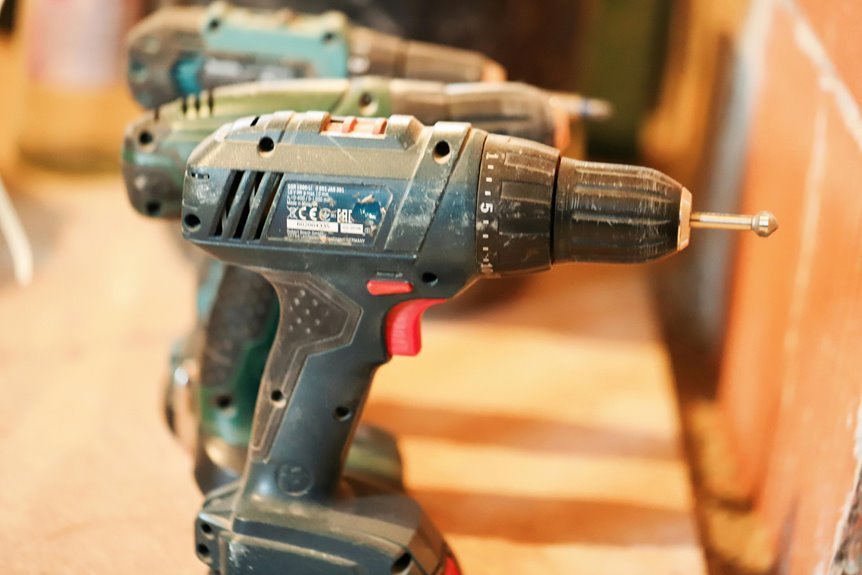

Whenever your drill starts to feel a little under the weather, the battery is often the quiet culprit. You can avoid a lot of jobsite frustration once you know what really changes power, runtime, and charging speed. From chemistry and voltage to heat, age, and storage, each factor plays its own part. And yes, a tiny battery light can save you from a very annoying surprise.
Which Battery Chemistry Works Best?
Whenever you’re choosing a cordless drill, battery chemistry matters more than many shoppers expect. If you want a tool that fits your pace, lithium-ion usually feels easier because it holds more energy, weighs less, and keeps your hand less tired during long jobs.
Nickel-cadmium can still serve you well if you value durability and many recharge cycles, but it includes toxic chemicals, so the battery safety comparison leans toward lithium-ion for most homes. You’ll also want to consider environmental disposal concerns, since old nickel-cadmium packs need extra care.
In practice, you belong with the battery that matches how you work, whether you’re hanging shelves or helping a neighbor with repairs. Choose the chemistry that gives you confidence, comfort, and less hassle at the end of the day.
How Does Voltage Affect Drill Power?
Voltage changes what your drill can actually do, and that makes a big difference once you move past light household work. Once you choose a higher-voltage pack, you usually feel stronger pull, faster spinning, and more confidence in tough spots.
That’s the voltage torque impact in simple terms: more voltage helps the motor push harder when the bit meets resistance. In power delivery basics, voltage acts like the force that gets energy moving from the battery to the tool.
How Do Amp-Hours Affect Runtime?
How long should your drill keep going before it needs a recharge? Amp-hours tell you that answer.
Consider runtime capacity like a fuel tank: a 2Ah pack usually runs shorter than a 5Ah pack, so you can work longer between swaps. Once you choose more amp-hours, you give your drill more staying power for bigger jobs, but you also add battery weight. That extra weight can feel real after a long afternoon, especially whether you’re overhead or working in tight spots.
For quick fixes, a smaller pack keeps things light and easy. For bigger projects, a larger pack helps you stay with the crew and finish strong. So you can match the battery to your pace, your task, and your comfort.
How Fast Do Cordless Drill Batteries Charge?
If battery life tells you how long your drill can work, charge time tells you how soon it can get back on the job. You want less waiting and more doing, so charging speeds matter when your project keeps moving.
Many 18V lithium-ion packs take about 3 to 5 hours on a standard charger, while some models finish sooner. For example, a Makita XFD14Z can recharge in 23 minutes with the right battery, and a Ridgid 18V R8701 needs just under 1 hour. That kind of rapid recharge helps you stay in the groove with your crew, even on busy days.
Regular charging also keeps your battery ready, so you’re not stuck watching the light blink instead of drilling.
How Does Temperature Affect Battery Performance?
Cold weather can make your drill battery feel weaker, so you might notice less runtime and slower power when you start working outside.
On the other hand, heat can stress the battery and shorten its life provided you keep pushing it hard. So, whenever you work in extreme temperatures, you need to give the battery a little extra care.
Cold Weather Power Loss
Temperature can quietly sap your drill’s battery, and you’ll notice it most while you’re working outside on a chilly day.
In cold weather, the cells move more slowly, so your drill might feel weaker and quit sooner than you expect.
That drop can be frustrating, but you’re not stuck with it.
Simple battery insulation helps hold more usable warmth, and that can improve winter runtime enough to keep your project on track.
You can also start with a fully charged pack, keep spares close to your body, and avoid long pauses in the cold.
Whenever your drill has a battery gauge, watch it promptly, because cold can make power fall fast.
With a little care, you’ll stay in control and keep working with the crew.
Heat-Induced Battery Stress
After a chilly job site, heat can be the next thing your drill’s battery has to handle, and that extra warmth can wear on it fast. You’ll notice weaker runtime while your pack sits in direct sun, rests near a hot motor, or charges in a cramped case. That stress can trigger battery overheating, which lowers power and can shorten the battery’s life.
- Keep your battery in shade between tasks.
- Let a hot pack cool before charging.
- Use the right voltage for the job.
- Check the battery often for swelling or odor.
- Stop work if heat keeps rising.
Whenever you stay alert, you protect your gear and keep your crew moving together.
In rare cases, extreme heat can lead to thermal runaway, so treat warmth as a warning, not a badge of toughness.
What Does Battery Discharge Rate Mean?
Battery discharge rate tells you how fast a cordless drill uses up its stored power while you work. In discharge rate basics, imagine it as the pace your battery empties when you squeeze the trigger.
As the current draw impact rises, your drill asks for more energy, so runtime drops faster. You’ll notice this during tough cuts, deep holes, or nonstop driving.
A lighter task, like screwing in trim, pulls less power and gives you more time between charges. So, as you choose a drill, match the battery’s discharge rate to your job. That way, you stay in control, avoid sudden slowdowns, and keep your project moving with less stress and fewer surprise pauses.
Why Do Older Batteries Lose Power?
As a cordless drill gets older, it starts to lose power because the battery can no longer hold and deliver energy as well as it once did. You’re not imagining it. battery aging causes slow chemical wear, and internal resistance buildup makes power flow harder. That’s why your drill might feel tired, even after a full charge.
- You get shorter runtime on the job.
- The drill might slow under pressure.
- Heat can rise faster inside the pack.
- Voltage drops happen sooner during use.
- Your projects might need extra swaps.
When you notice this change, you’re seeing normal wear, not bad luck. A newer pack gives you the steady push you want, so you can keep working with confidence and feel like part of the crew.
How Should You Store Drill Batteries?
Where you store your drill batteries can make a big difference in how long they stay ready for work. Pick a proper storage location that stays cool, dry, and out of direct sun. You’ll help the cells stay calm and steady, not stressed out like a crew on a Monday morning. Keep batteries away from metal tools, wet floors, and heaters.
Store them at about half charge provided you won’t use them for a while, and check them once in a while as part of your battery maintenance routine. Also, keep the caps on provided your pack has them, and leave batteries in a clean box or shelf where they won’t get bumped. That way, you’ll protect your gear and feel ready as soon as the job calls.
Which Battery Features Matter Most on the Job?
Once you’ve stored your drill batteries the right way, the next question is how well they’ll actually perform as soon as the work starts. You need the features that keep you moving, not guessing.
Battery indicators help you avoid surprise shutdowns, so you can finish a shelf or deck board with confidence. Then focus on task matching, because 12V packs suit light fastening, while 18V or higher handles tougher drilling. Amp-hours matter too, since they shape runtime like a fuel tank. Lithium-ion packs usually feel lighter and deliver more power than nickel-cadmium, so your arm won’t hate you by lunch. For busy days, choose fast charging and enough capacity for steady work.
- Clear battery indicators
- Smart task matching
- Right voltage for torque
- Enough amp-hours for runtime
- Lighter lithium-ion packs
Frequently Asked Questions
How Do Battery Indicators Help During Long Drilling Projects?
Charge level alerts and runtime monitoring let you track power before it drops too low. You can schedule pauses, replace packs in time, and keep drilling without unexpected interruptions.
Does a Higher-Capacity Battery Make a Drill Noticeably Heavier?
Yes, you will usually feel the difference. A higher capacity battery adds more weight, so the drill can feel bulkier, even if a well balanced design still helps it stay steady and comfortable. You get longer runtime, but your arm may get tired sooner.
Which Battery Type Is Safer for Indoor Use?
Lithium ion batteries are generally safer for indoor use because they offer cleaner chemistry, lower weight, and fewer ventilation concerns indoors. They also avoid toxic nickel cadmium materials, making them a better choice for shared indoor projects.
Can 12V Drills Handle Tougher Materials Effectively?
Yes, a 12V drill can handle some tough materials, but its lower torque makes it better for light to moderate tasks. It offers precise control in a compact form, while heavy drilling jobs usually need a more powerful drill.
Do Multiple Speed Settings Extend Battery Life?
Yes, they can. Lower speeds use less power on light tasks because the motor works less hard. That can help the battery last longer and give you more control on each job.