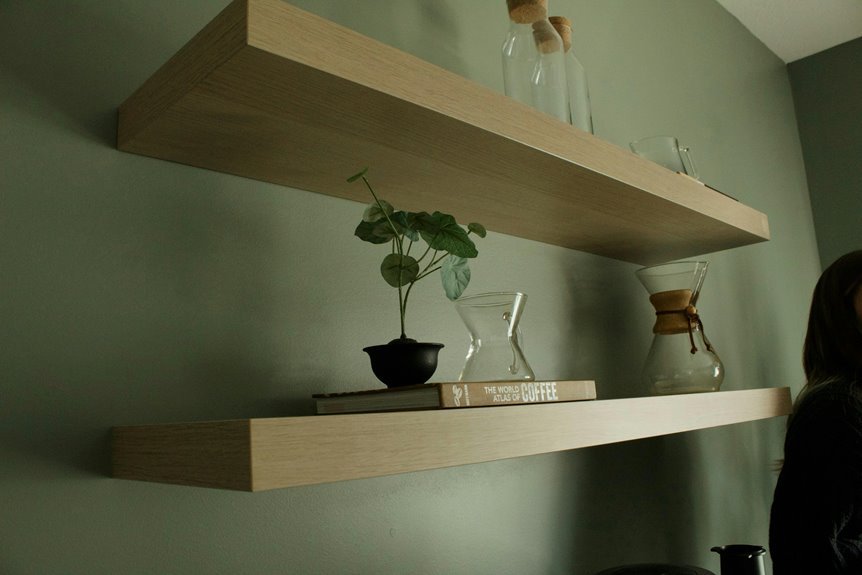

When you use floating shelves well, you’re not just adding storage, you’re changing how a room breathes. You lift clutter off the floor, open up wall space, and make tight areas feel easier to move through. The trick is in the details: shelf depth, strong mounting, and smart placement all work together. Next, you’ll see how to choose shelves that fit your space without making it feel crowded.
Why Floating Shelves Save Space
When you’re trying to make a room feel bigger, floating shelves give you a simple win because they leave the floor open and send storage upward. You keep wall clearance around furniture, so your room feels less boxed in.
That extra air helps room openness, and you notice it right away whenever the walls seem calmer and the path looks clearer. Instead of crowding a corner with a heavy cabinet, you use the wall itself. That shift frees your eyes and your steps.
You also stay organized without adding bulk, so everyday items don’t spread across tables or the floor. Whenever you pick a shelf height that fits your space, you make small rooms feel easier to live in and more welcoming too.
What Floating Shelves Are Best For
Floating shelves work best for the things you want to reach often, show off nicely, or keep neatly off the floor. You can use them for books, mugs, plants, framed photos, and folded towels.
In a kitchen, they hold dishes and spices within easy reach. In a bedroom or lounge, they help you add decorative styling without crowding tables and dressers. In a bathroom, they keep toiletries tidy and visible.
Should you like a calm, collected look, choose shelves with material finishes that match your room. You’ll make your space feel more open, and your favorite items won’t hide in cabinets. That little shift can make your home feel more like yours, which always feels good.
How to Mount Shelves Safely
To keep your shelves secure and your wall intact, start with careful planning and a steady hand. You’ll feel more confident once you map stud finder placement before you drill, because it shows where the strongest support lives.
Next, choose the right wall anchor types for spots that miss a stud, so your shelf still holds tight. Then mark level points, drill clean holes, and drive each fastener until it sits firm, not forced. Should the shelf wiggles, stop and check alignment before adding weight.
You’re not doing this alone; careful steps help your space feel solid, neat, and truly yours. Take your time, trust the process, and let each bracket do its quiet job.
Choose the Right Shelf Depth
Start by measuring the items you want to store, because the right shelf depth should fit them without wasting space.
Then match that depth to the shelf’s job, whether you’re showing off decor or holding heavier everyday items.
You’ll also want to leave enough clearance so things sit safely and don’t feel cramped.
Measure Item Dimensions
When you measure the items you want to store, you make it much easier to pick a shelf depth that truly fits your space. You also build a shelf that feels made for you and your home. Start with item sizing, then record the widest point, tallest point, and any handles or lips that stick out.
Next, use clearance planning so your items don’t scrape the wall or crowd each other.
- Measure width.
- Measure height.
- Measure depth.
- Add a little breathing room.
That extra room matters because shelves feel calmer whenever things aren’t squeezed in. Whenever you share the space with books, jars, or decor, these numbers help you choose depth with confidence. Then your shelf works with you, not against you.
Match Shelf Purpose
Shelf depth should match the job you want it to do, because the right shelf feels useful right away and never awkward later. Whenever you’re showing small decor, choose 6 to 8 inches. For books, plants, or pantry items, 10 to 12 inches often fits better. Your shelf material also matters, since thick wood feels steady, while lighter boards suit gentler loads.
| Purpose | Depth | Best Fit |
|---|---|---|
| Decor | 6-8 in | Frames, candles |
| Everyday storage | 10-12 in | Books, bowls |
| Heavy use | 12 in+ | Tools, bins |
Pick a bracket style that matches the load and keeps the look you like. Whenever you choose depth with care, your shelf feels like it belongs in your space, not like an afterthought.
Balance Depth And Clearance
Now that you know the right depth for the job, the next step is making sure that depth still leaves room to use the shelf comfortably. You want the shelf to fit your stuff and your hands, not trap both. Good clearance planning keeps jars, books, and decor easy to reach.
Use depth sizing with the room in mind:
- Choose 6 to 8 inches for light display items.
- Pick 10 to 12 inches for books or kitchen goods.
- Leave extra space above the tallest item.
- Check that doors, switches, and elbows still move freely.
When you balance depth and clearance, your shelves feel open, useful, and part of your space. That little bit of breathing room makes the whole wall feel friendly, not crowded.
Use Floating Shelves for Vertical Storage
By taking storage off the floor and moving it up the wall, floating shelves give you an easy way to use vertical space without crowding the room. You can pair them with wall mounted organizers to stack needs neatly, then reach for daily items fast. In small rooms, this feels like relief, not sacrifice, because your space starts working with you.
| Height | Use | Feeling |
|---|---|---|
| Low | Baskets | Easy reach |
| Mid | Books | Calm order |
| High | Decor | Open air |
| Top | ceiling high storage | Extra room |
When you plan shelf gaps, you make room for taller items and keep the wall balanced. That simple move helps you join a home that feels organized, welcoming, and truly yours.
Mix Display Items With Daily Essentials
You can make your floating shelves work harder by mixing pretty display pieces with the things you use every day.
That balance keeps your space looking styled while still letting you grab your keys, mugs, or lotion without a fuss.
When you swap in a few seasonal essentials now and then, the shelf stays fresh and feels easy to live with.
Display And Daily Use
Although floating shelves shine as display pieces, they work best whenever they also hold the things you reach for every day. You can keep your favorites in sight while supporting daily routines and quick access. That mix helps you feel at home, not staged. Place a few pretty items beside the objects you use most often, so the shelf feels friendly and lived in.
- Put mugs near a small plant.
- Store keys beside a framed photo.
- Set lotion next to a candle.
- Keep mail under a book stack.
This setup lets you grab what you need without losing the warm look you want. Whenever your shelves reflect your life, your space feels more yours, and that little win can make your day smoother.
Balance Form And Function
To balance form and function, start with the items you use every day and then layer in a few pieces that make you smile. Put mugs, soap, or keys where your hand reaches initially, so your shelf feels easy and calm.
Then add one plant, a framed photo, or a favorite book to build design harmony. You’ll create visual proportion whenever you group taller items beside shorter ones and leave a little breathing room.
That mix helps your shelf look lived-in, not crowded. It also lets you feel at home because your essentials stay close, while your display still shows your style.
Whenever each item has a purpose, your shelf works hard and still feels warm.
Rotate Seasonal Essentials
Once your floating shelves already hold the things you reach for every day, they can start working a little harder for the seasons, too. You can mix in small accents so your shelf still feels like home, not a showroom.
Whenever you plan seasonal decor swaps, keep your daily mug, lotion, or key dish in place, then slide in one fresh piece beside it. That way, you stay organized and still get a little joy each week.
- Swap a candle for a pine sprig in winter.
- Tuck in bright flowers in spring.
- Add a shell or woven bowl in summer.
- Use a tiny pumpkin, then start your holiday storage rotation.
Because your shelves stay familiar, you’ll feel settled while the look changes with you.
Best Rooms for Floating Shelves
As you’re choosing the best rooms for floating shelves, it helps to start with the spaces that need both storage and style the most. In your home room, floating shelves can frame books, plants, and photos, turning plain walls into warm home room accents that feel like yours.
In hallways, they do quiet work, and hallway styling gets easier because you can add small art pieces, keys, or a welcome touch without crowding the path. Your kitchen also benefits, since shelves keep mugs and everyday dishes close by. In bathrooms, they lift toiletries off tight counters. In bedrooms, they create calm spots for reading and keepsakes. In each room, you get more room to breathe and a home that feels connected.
Common Floating Shelf Mistakes to Avoid
When you hang floating shelves, poor wall anchoring can turn a clean look into a shaky mess fast.
You also need to watch the weight, because overloading a shelf can pull it loose or damage the wall.
Should you plan for both strength and load, you’ll avoid the most common headaches before they start.
Poor Wall Anchoring
- Find studs with a reliable finder.
- Check the wall surface for cracks or softness.
- Use anchors rated for your wall type.
- Tighten hardware evenly, then test for movement.
When you anchor into sound framing, your shelf stays steady and your room feels more put together. That small effort helps you join the crowd that gets both style and peace of mind, without the annoying tilt that makes every mug look nervous.
Overloading Shelf Capacity
Overloading a floating shelf can turn a sleek storage fix into a stress point fast, so it helps to treat weight limits as part of the design, not an afterthought. You want to check the load rating before you place anything on it, because that number tells you how much trust the shelf can carry. Spread items out instead of stacking them in one spot, since weight distribution matters as much as total pounds.
Put heavier things near the studs and lighter decor at the ends. Should you’re unsure, test the setup with a few items initially and watch for sagging. That small pause can keep your shelf steady, your wall safe, and your room feeling like yours.
Style Floating Shelves Without Clutter
How do you make floating shelves look neat instead of busy? You choose a few pieces that speak to you and let each one breathe.
Start with style layering by mixing heights, textures, and finishes, then keep decorative balance so no side feels heavy. You’ll create that calm, lived in look people love.
- Group books, a plant, and one framed photo.
- Leave open space beside each object.
- Repeat one color so the shelf feels connected.
- Swap extras out whenever the arrangement starts to crowd.
Because you want your space to feel welcoming, aim for items that reflect your taste and story. A shelf with a clear rhythm feels friendly, not fussy, and it helps your room feel like home.
Measure, Install, and Maintain Shelves
Before you drill the initial hole, take a few minutes to measure carefully, because that step saves you from a lot of patching later. Use your installation checklist to mark stud centers, shelf length, depth, and the space between each shelf. Then hold the level steady and confirm every line before you commit.
You’ll feel calmer whenever the initial bracket sits true, and the rest follows easily. Anchor into studs whenever you can, since that gives your shelves the strength to hold books, jars, or framed keepsakes without a wobble.
After setup, make shelf maintenance part of your routine. Wipe dust, check screws, and watch for sagging after heavy use. A quick monthly look keeps your shelves looking neat and keeps your space feeling like it belongs to you.
Frequently Asked Questions
How Much Weight Can a Floating Shelf Hold?
A floating shelf typically supports about 50 pounds at each stud attachment point when the shelf rating and bracket design are matched properly. With three secure attachment points, it can hold roughly 150 pounds.
What Spacing Works Best for Multiple Floating Shelves?
You’ll usually place multiple floating shelves 12 to 18 inches apart, while 8 to 12 inches works better for smaller items. This spacing keeps the layout balanced and helps the room feel open rather than crowded.
How Deep Should Shelves Be for Heavy Items?
Use shelves that are 10 to 12 inches deep for heavy items, with shelf thickness around 2.5 to 3 inches for added support. Check the maximum depth and clearance needed for your items so everything stays secure and organized.
Do Floating Shelves Need Wall Studs for Support?
Yes, use wall studs whenever possible, but strong wall anchors can also support drywall. This helps keep your shelves secure, level, and ready to use.
Which Shelf Materials Are Strongest for Long-Term Use?
You’ll get the strongest long term support from solid hardwoods like oak, maple, or walnut. Their dense grain keeps shelves sturdy, and better moisture resistance helps them hold up in kitchens or bathrooms, making them dependable for years.