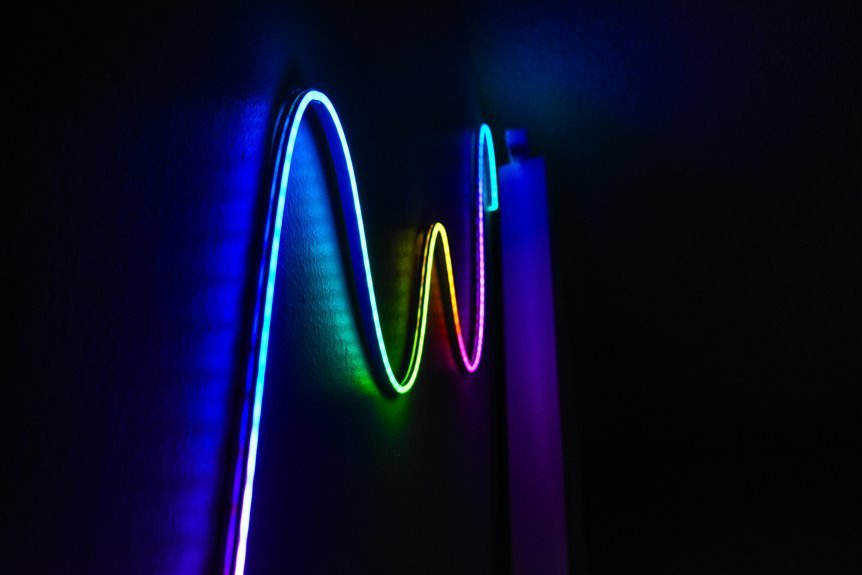

You may not know that LED strip lights feel soft not because they dim the room, but because they spread tiny light points so closely that your eyes blend them into one calm glow. Whenever you add diffusers and channels, you blur the dots even more, so the light washes across cabinets, walls, or shelves without that sharp glare that can make a space feel cold. The real trick is in placement, brightness, and color, and that’s where things get interesting.
What Makes LED Strip Lights Glow Softly?
LED strip lights glow softly because they use many tiny LEDs spread along a flexible board, so the light doesn’t come from one harsh point.
You get a gentle electroluminescent glow that feels easy on your eyes and welcoming in your space.
With low voltage operation, the strip stays efficient, and each diode adds its own small spark instead of a glaring blast.
That spacing helps you enjoy a smooth line of light that feels calm, not crowded.
Because the current moves through semiconductor material, the strip turns energy into light with little wasted heat.
So you can place it where you want warmth, comfort, and a sense of belonging.
It’s a simple setup, but it makes your room feel like it fits you.
Why Diffusers and Channels Matter
When you add a diffuser, you soften the sharp points of each LED and get a smoother, calmer glow. Whenever you use a channel, you hide the strip and create clean lines that make your install look neat and polished.
Together, they help your lighting feel more finished, less harsh, and a lot easier on the eyes.
Diffusion for Softer Light
Because bare strip lights can feel sharp or harsh, a diffuser and channel help soften the glow and make the whole setup look finished. You get gentler light diffusion, so the LEDs stop showing as bright dots and start feeling calm and welcoming.
With frosted covers, the beam spreads more evenly across the room, and that can make your space feel easier to relax in. You don’t lose the purpose of the strip; you just make it friendlier to your eyes and to everyone sharing the room.
That smoother light works well in bedrooms, social areas, and tucked corners where you want comfort, not glare. Whenever you choose diffusion, you create a softer mood that helps your room feel more like home and less like a display.
Channels for Clean Lines
A diffuser and a channel do more than hide the strip light, since they help shape the whole look of the room. You get a clean installation that feels calm, neat, and easy to trust. The channel holds the strip straight, and the diffuser softens hot spots, so your line of light looks smooth instead of busy. That matters whenever you want a minimalist design that still feels warm and welcoming.
| Benefit | What you notice |
|---|---|
| Straight alignment | No crooked edges |
| Soft glow | Less glare |
| Better protection | Fewer bumps and dust |
| Polished finish | A more inviting space |
Whenever you match the channel to your surface, you make the space feel like it truly fits you.
How LED Strip Lights Spread Ambient Light
LED strip lights spread ambient light via washing a space with a soft, even glow instead of blasting one harsh beam.
You feel the room open up because each diode shares the load, creating uniform illumination that reaches across walls and edges.
That steady spread helps you relax, and it also makes your space feel welcoming, like it’s part of your story.
- Even diode spacing keeps brightness balanced.
- Flexible placement lets you guide light along clean paths.
- Low heat lets the glow stay gentle and comfortable.
Because the strip runs on a slim circuit board, it hides easily while still sharing light where you need it.
Where Should You Place LED Strip Lights?
You can place LED strip lights under cabinets to brighten work areas without harsh glare.
You can also hide them behind furniture to add a soft glow that makes a room feel warmer and more finished.
These spots work well because they keep the lights out of direct view while still giving you a clean, stylish effect.
Under Cabinets
Beneath your cabinets, the best place for strip lights is usually along the front inside edge, facing down toward the counter. You get a clean cabinet edge glow, and your prep space feels brighter without harsh spots. Because the light sits close to the front, it reaches your hands, cutting board, and sink area with a soft under shelf wash that feels inviting.
- It helps you see better whenever you chop, read labels, or clean.
- It keeps the fixture concealed, so your kitchen still feels calm and neat.
- It adds a warm layer that makes you feel at home, even on busy nights.
If you share the space with others, this placement also helps everyone enjoy the same clear, cozy light.
Behind Furniture
Behind furniture, strip lights work best whenever you tuck them just inside the back edge so the glow spills onto the wall instead of straight into your eyes. You get a soft furniture edge glow that feels calm and welcoming, not harsh or busy. This concealed backlighting effect also makes your room feel larger, which can help you relax and feel at home fast.
Place the strip along the back of a sofa, console, or bed frame, and keep the LEDs facing the surface they should wash. That way, you share the light, not the source. Use even spacing and a clean adhesive line so the strip stays neat. Then dim it a little, and your space will feel like it’s giving you a quiet nod of support.
How Brightness and Color Change the Mood?
Brightness and color work together to shape how a room feels, and that’s where LED strip lights really shine. With color psychology, you can steer the mood toward calm, energy, or comfort. Warm tones can help you feel settled, while cooler tones can make the space feel fresh and clear. Brightness levels matter too, because soft light invites quiet moments, and stronger light can lift your focus.
- Dim settings create a cozy, easygoing vibe.
- Gentle blues and whites can feel clean and open.
- Rich ambers can make shared spaces feel welcoming.
When you match the glow to your space, you help everyone feel at home.
That small choice can turn an ordinary room into a place people want to stay in longer.
Which LED Strip Types Work Best for Ambient Lighting?
If you liked how color and glow can shape a room’s mood, the next step is choosing the strip type that can actually deliver that feeling.
You’ll usually get the best ambient results from warm white strips, RGB tunable strips, or high density strips. Warm white gives you that calm, lived-in feel that helps a space feel like yours. RGB tunable strips let you shift from soft gold to cooler tones, so you can match the room to your evening plans. High density strips pack more LEDs into each length, which helps you get a smoother wash of light across walls, ceilings, or shelves. Whenever you select one, consider about the mood you want, the size of the room, and how close people will sit to the light source.
How Do You Avoid Harsh Spots and Glare?
So, how do you keep LED strip lights soft and easy on the eyes? You spread the glow, hide the source, and use lighting angle control so the beam washes walls instead of poking at you. A diffuser helps, and a dot free installation keeps each diode from shouting for attention. When you tuck strips into a channel or cove, you join a calmer look that feels made for your space.
- Place the strip where your eyes can’t see the LEDs directly.
- Aim light toward a surface, not straight out into the room.
- Use warm dimmed settings for a gentle, shared vibe.
This setup cuts glare, smooths hot spots, and makes your room feel welcoming. If you’ve ever squinted at a strip, you know the fix is usually simple.
Frequently Asked Questions
How Do LED Strip Lights Connect to Power Safely?
Connect LED strip lights safely by using the correct power adapter, matching the strip voltage, and verifying polarity. Inspect connectors carefully, secure every joint, and keep the circuit within its rated load.
What Voltage Is Best for Long LED Strip Runs?
24V is best for long LED strip runs. It cuts voltage drop and keeps the light even, especially when you add power injection along the strip. Think of it as workshop know-how: the current stays steady, and the whole run stays bright.
Can LED Strip Lights Be Used Outdoors in Rain?
Yes, you can use LED strip lights outdoors in the rain if you choose strips with a proper weatherproof rating and secure outdoor sealing. Your setup will stay protected, bright, and dependable.
How Long Do LED Strip Lights Typically Last?
LED strip lights commonly last between 25,000 and 50,000 hours, which can mean many years of use. Heat, power quality, and installation conditions all affect longevity. Watch for signs such as dimming, flickering, or color changes, which often indicate it is time to replace them.
Do LED Strip Lights Use a Lot of Electricity?
No, LED strip lights use very little electricity. Their low power draw and efficient design can help keep your energy costs down while still giving you the warm, decorative lighting you want.